
Search Illinois Traffic Ticket Records
Illinois traffic ticket records are public court documents. You can search them in many ways. The state has 102 counties. Each one keeps its own traffic court files at the Circuit Clerk office. You can look up traffic ticket records in Illinois from home through the state court system. Some counties run their own search tools. In-person visits to the courthouse work too. Whether you got a ticket last week or need to find an old case, Illinois traffic ticket records are not hard to track down. This page covers the main tools and steps to search records across the state of Illinois.
Illinois Traffic Ticket Records Quick Facts
Illinois Traffic Ticket Records Online
The fastest way to find traffic ticket records in Illinois is through the state court system. Illinois runs a central hub that connects all 102 county Circuit Courts. You start at the Illinois Courts website, which lists tools for searching cases, paying fines, and filing court papers. Most traffic cases in Illinois go through one of 24 judicial circuits. Each circuit covers a group of counties. The site also has links to local court pages where you can dig into county-level traffic ticket records and find specific case details.
The main online tool for traffic ticket records in Illinois is the e-Guilty system. It lets you plead guilty to minor traffic offenses and pay your fine in one step. The Illinois Supreme Court set up this system under Supreme Court Rule 529. Standards were first adopted on December 20, 2006 and later updated on July 1, 2019 to cover Rules 529, 530, and 531. Not every county uses e-Guilty yet. The Chief Circuit Judge and Clerk of the Circuit Court in a county must opt in before their residents can use it for Illinois traffic ticket records. Check the e-Guilty page to see if your county takes part.
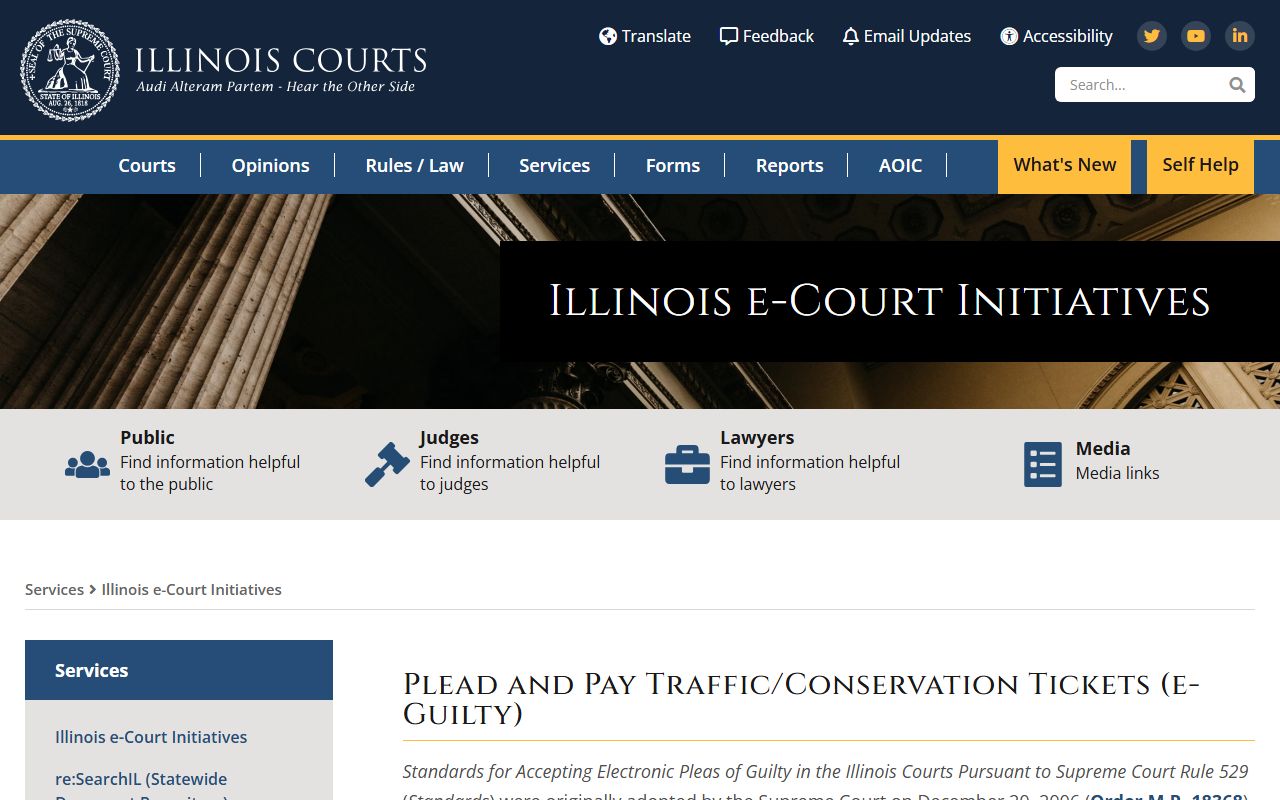
Only cases marked "No Court Appearance Required" can go through e-Guilty. Misdemeanor charges like DUI or reckless driving still need a court date in Illinois.
How to Pay Traffic Tickets in Illinois
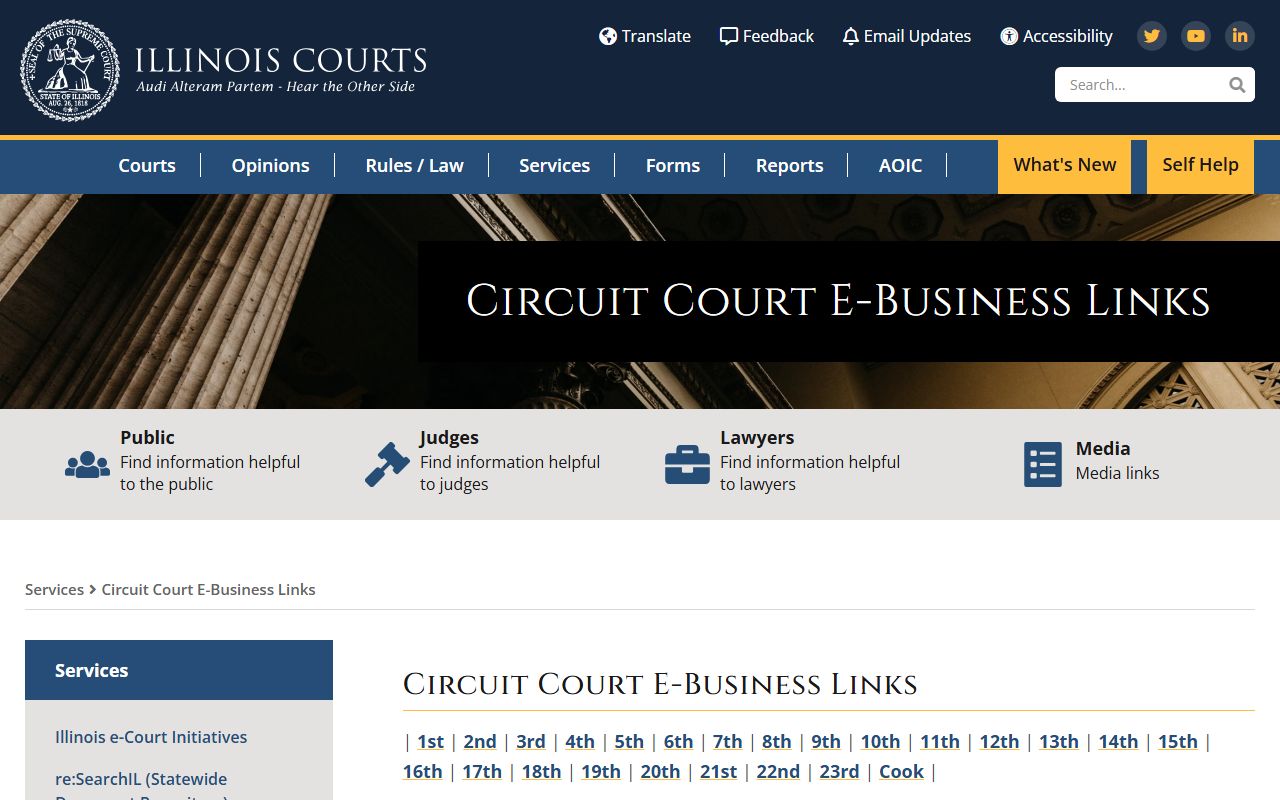
You have several ways to pay a traffic ticket in Illinois. Each county sets its own methods. Online payment portals are the most common path. Many counties use the JANO Technologies platform (also called Magnus ePay) for credit and debit card payments. Others use systems like Judici, PayIt, or CourtMoney. The Circuit Court E-Business Links page shows which tools each county offers. It is a good first stop when you need to pay a traffic ticket or look up your case status in Illinois.
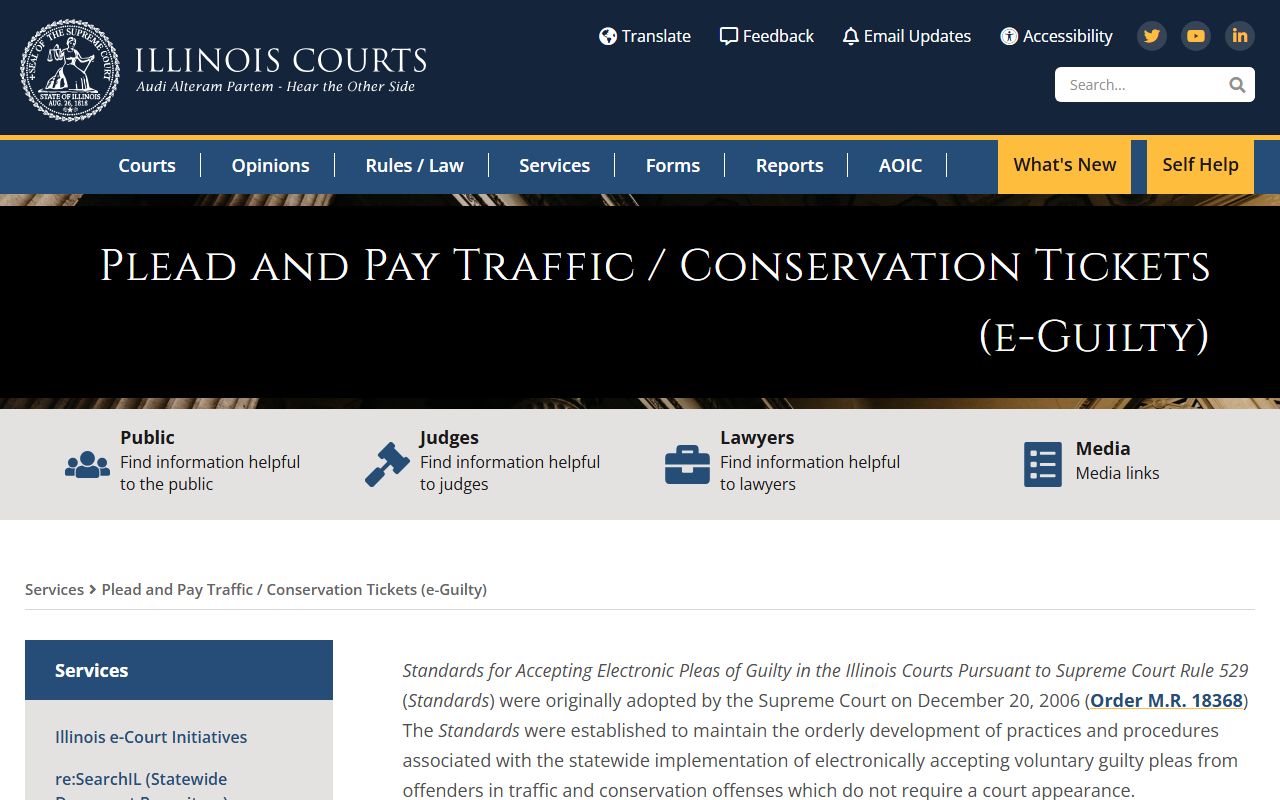
Conservation tickets work the same way. If you got a ticket for a wildlife or park rule in Illinois, you can plead guilty and pay through the e-Guilty conservation page in counties that take part. You enter your case info, plead guilty, and pay the fine. The process matches how regular traffic tickets are handled online in Illinois.
In-person payments go to the Circuit Clerk's office in your county. Bring the signed copy of your ticket. Most clerks take cash, checks, and credit cards. Some charge a service fee for card use. Mail payments are also an option in Illinois.
Before paying online, have these items ready:
- Your ticket or citation number
- Driver's license number (found on the ticket)
- Court case number if you have one
- A valid credit or debit card
Note: Allow five to ten business days after your ticket date for it to show up in the online system.
E-Filing and Illinois Court Records
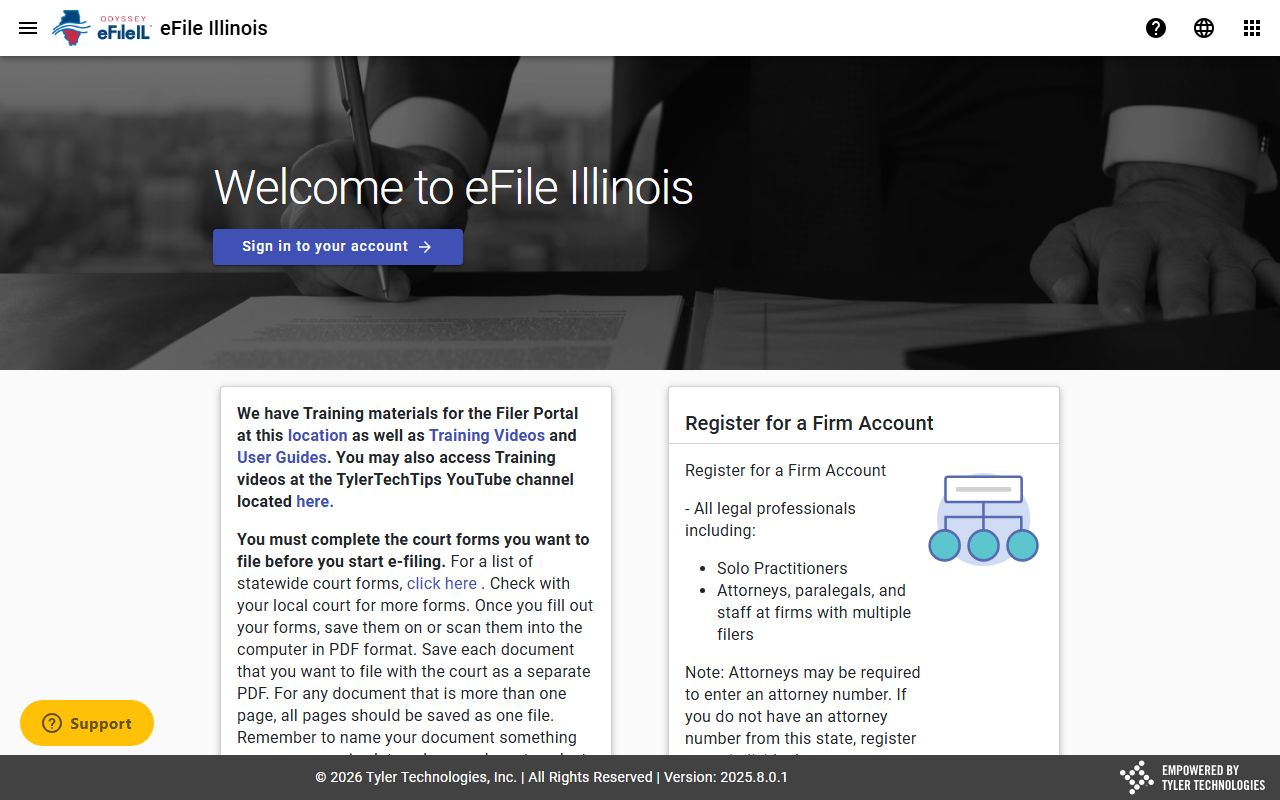
Illinois requires all civil court filings to go through the eFileIL system. This includes many traffic-related motions and documents. The eFileIL portal is the statewide tool for submitting court papers online. You make an account, pick your county, choose the case type, and upload your files. Lawyers and self-represented people use this to file motions tied to traffic cases in Illinois, such as motions to vacate a judgment or requests for a new court date. Standard court filing fees still apply, but there is no extra charge from the state for using the e-filing tool.
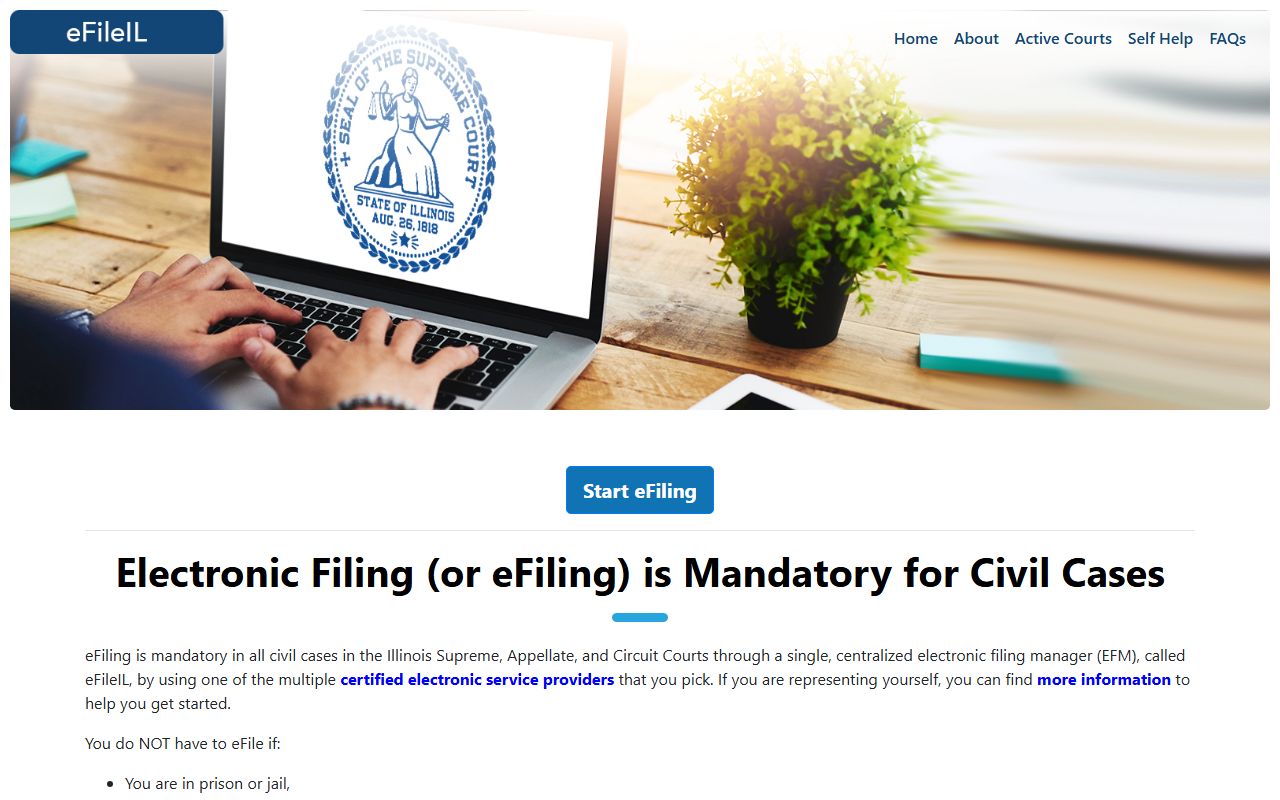
The system runs through Tyler Technologies. You can also reach it at efileil.tylertech.cloud. Both links go to the same portal for Illinois traffic ticket records and other court filings.
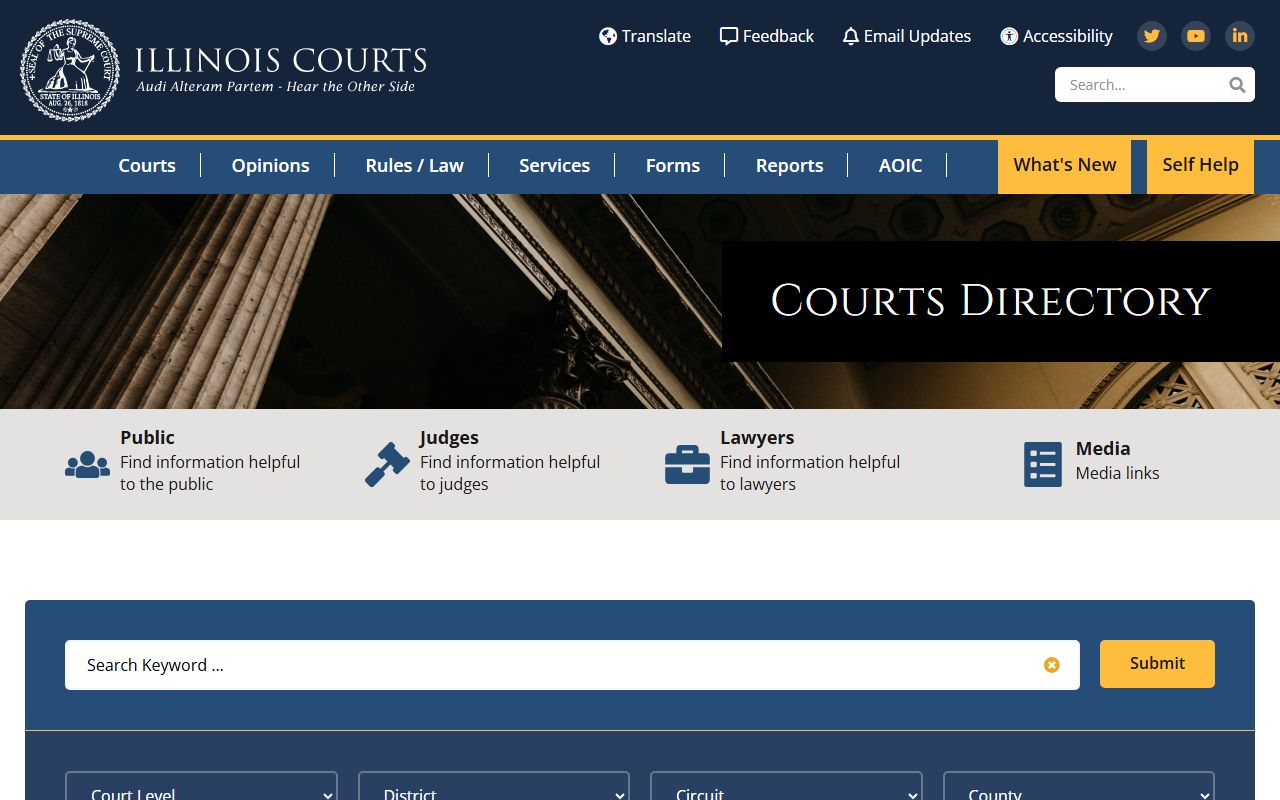
To find which court handles your traffic case, use the Illinois Circuit Court Directory. It lists all 102 county courthouses with addresses, phone numbers, and judge names. Each county belongs to one of 24 judicial circuits in Illinois. Clicking on a county shows you the courthouse location and contact details for the Circuit Clerk who keeps traffic ticket records there.
Note: Some counties also run their own case search tools on local websites.
Illinois Driving Record Abstracts
Your driving record is a separate document from traffic ticket records. The Illinois Secretary of State keeps driving abstracts for all licensed drivers. These show your license status, past convictions, suspensions, and revocations. You can buy your abstract online for $21 (a $20 fee plus $1 for processing). Visit the driving record portal to purchase one. You need a valid credit or debit card and your license info. The PDF is ready right away and can be reprinted for five days after you buy it.
Three types of abstracts exist in Illinois. A Public Driving Record has basic info like license status and some convictions. A Court Purposes Abstract is the most complete type you can get. It shows all sanctions, supervisions, and violations on your record. Use this type for legal matters. An Internal Abstract is only for Secretary of State staff and is not available to the public.
You can also get your abstract in person at any of the 135 Secretary of State locations across Illinois. The fee is $20 at the window, plus $1 if you pay by card. By mail, send a check for $20 to the Driver Analysis Section, 2701 S. Dirksen Parkway, Springfield, IL 62723. Include your full name, date of birth, license number, and sex. Mail requests take two to three weeks to arrive. For questions, call the Driving Record Abstract Information Unit at 217-782-2720, Monday through Friday from 8 a.m. to 4:30 p.m.
Illinois Traffic Ticket Records and State Law
Illinois traffic laws fall under the Illinois Vehicle Code, 625 ILCS 5. This is the main body of rules for all traffic matters in the state. It covers speed, DUI, insurance, and much more. Every traffic ticket in Illinois ties back to a section of this code, and those sections shape what shows up in your traffic ticket records.
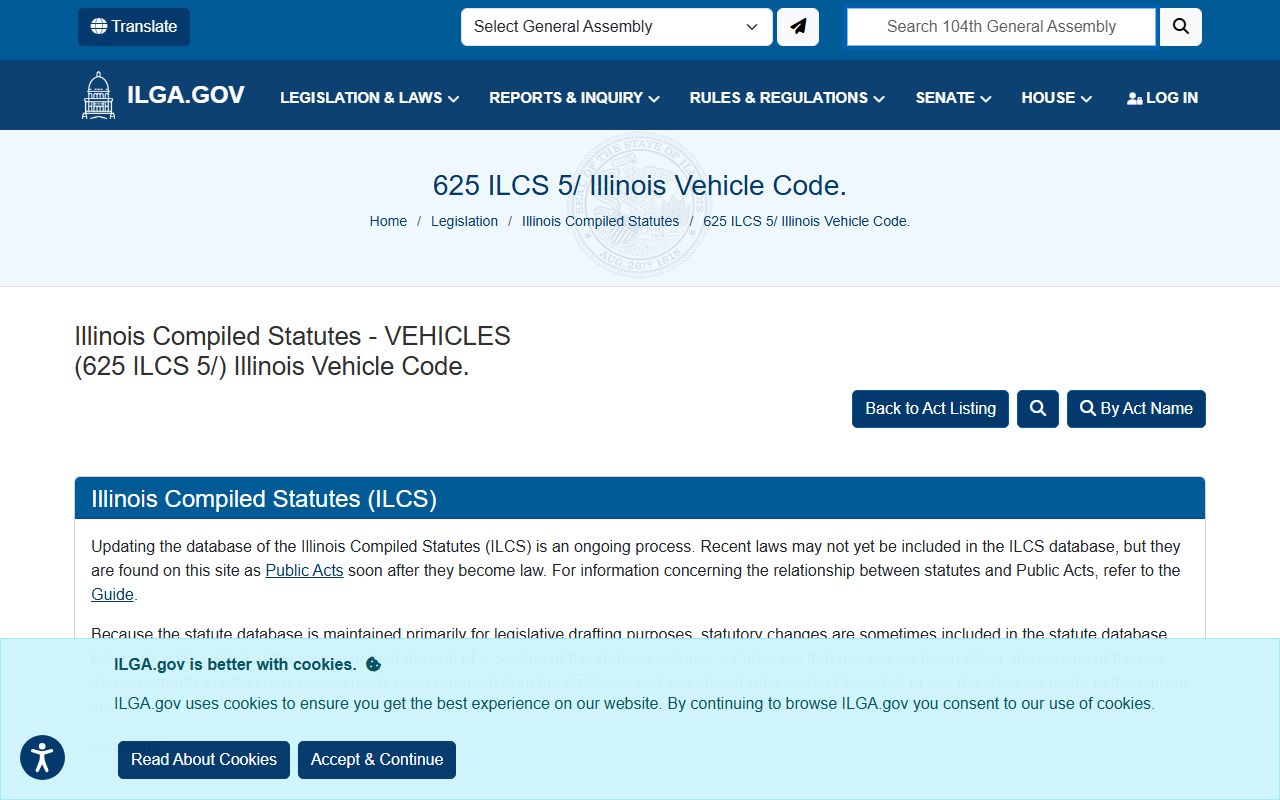
Speed limits in Illinois depend on the road. Urban streets are capped at 30 mph. Alleys are 15 mph. Interstate highways top out at 70 mph. Multi-lane highways are 65 mph. All other roads are 55 mph. Going 26 mph or more over the limit is a Class B misdemeanor under 625 ILCS 5/11-601. At 35 or more over, it goes up to a Class A misdemeanor. Speeding in a school or construction zone carries extra fines. These violations create traffic ticket records that show up on your Illinois driving abstract and can affect your insurance rates for years.
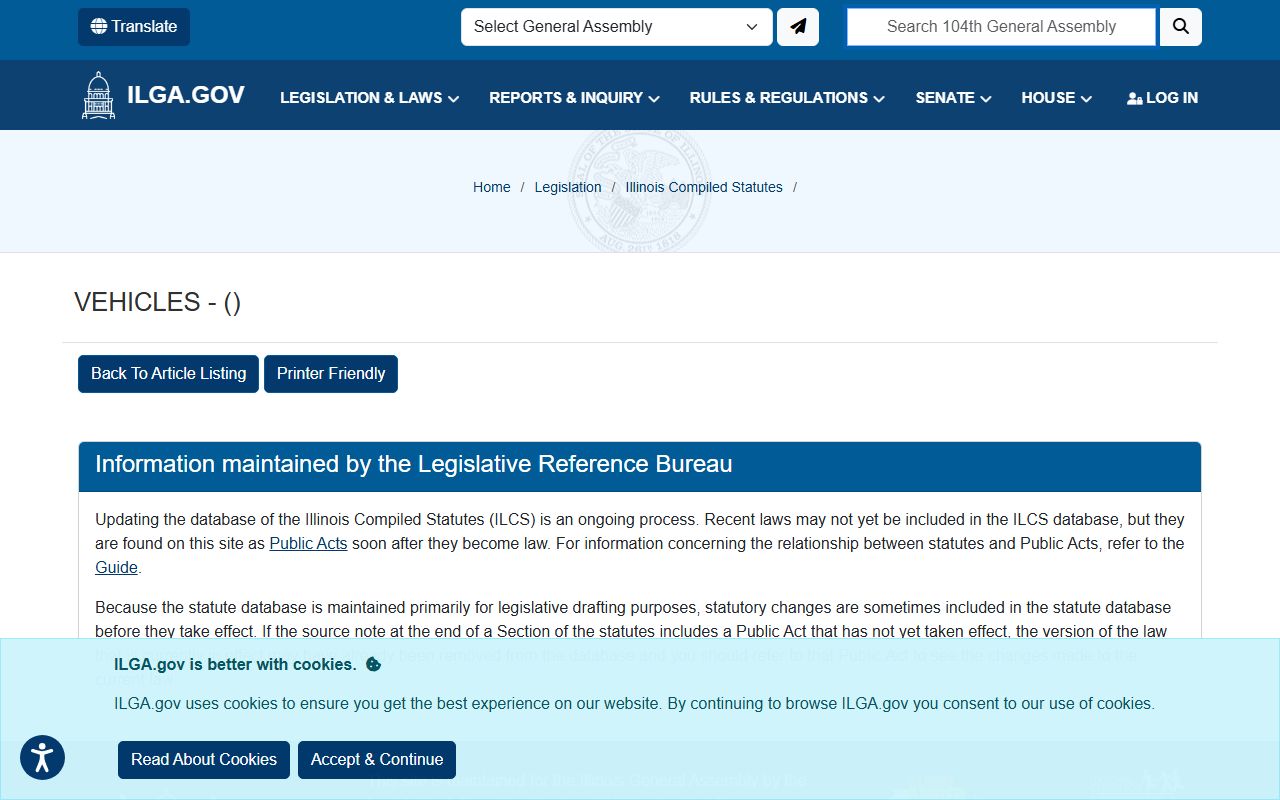
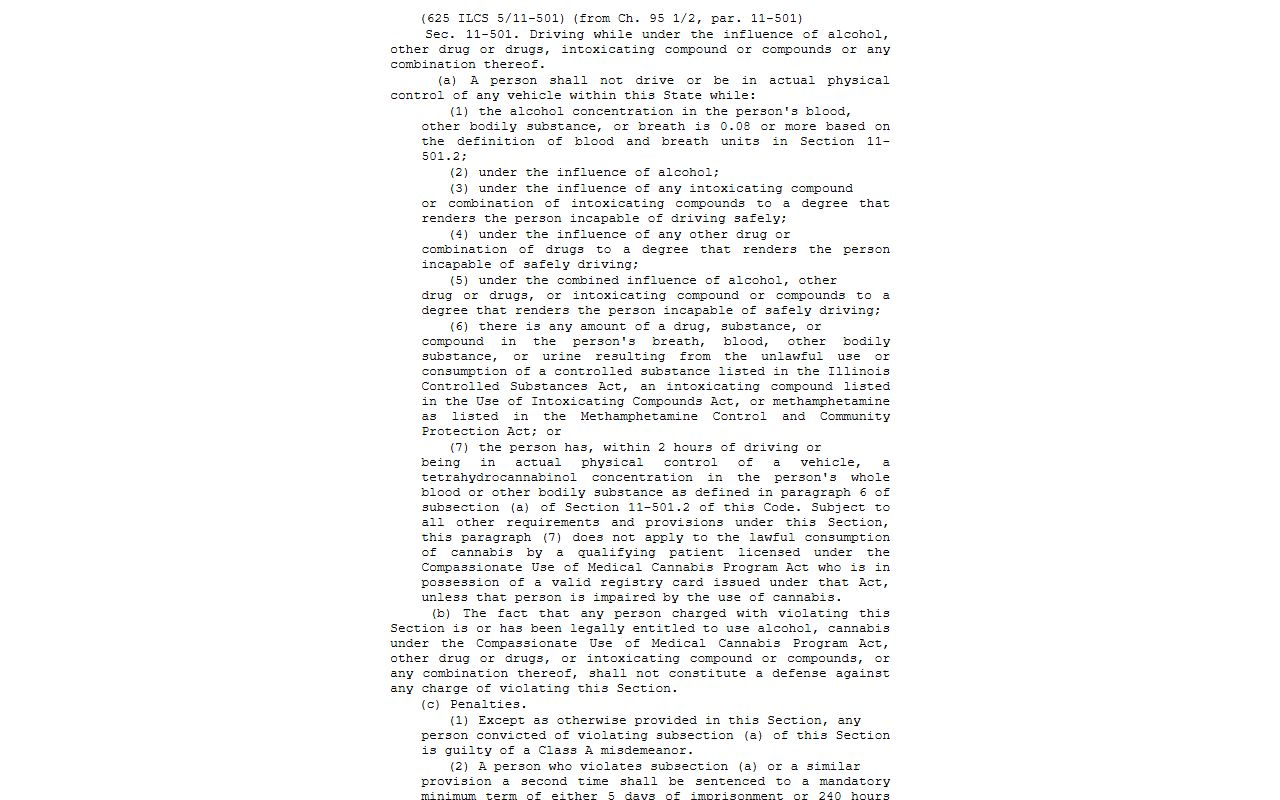
DUI is one of the most serious traffic offenses in Illinois. Under 625 ILCS 5/11-501, driving with a blood alcohol level of 0.08 or higher is against the law. A first DUI is a Class A misdemeanor. Penalties include up to one year in jail and fines up to $2,500. A second offense means five days in jail or 240 hours of community service. A third DUI is a Class 2 felony with mandatory prison time. The Secretary of State suspends your license for six months if you fail a breath test and 12 months if you refuse one. These cases leave lasting marks on Illinois traffic ticket records.
Scott's Law is another common source of traffic ticket records in Illinois. Under 625 ILCS 5/11-907, you must change lanes or slow down when you pass a stopped emergency vehicle with flashing lights. Fines range from $250 to $10,000 for a first violation. Causing injury means a license suspension of 180 days to two years. Causing death results in a two-year suspension. Fleeing police under 625 ILCS 5/11-204 is a Class A misdemeanor on the first offense and becomes a Class 4 felony by the third.

Red Light and Speed Camera Tickets
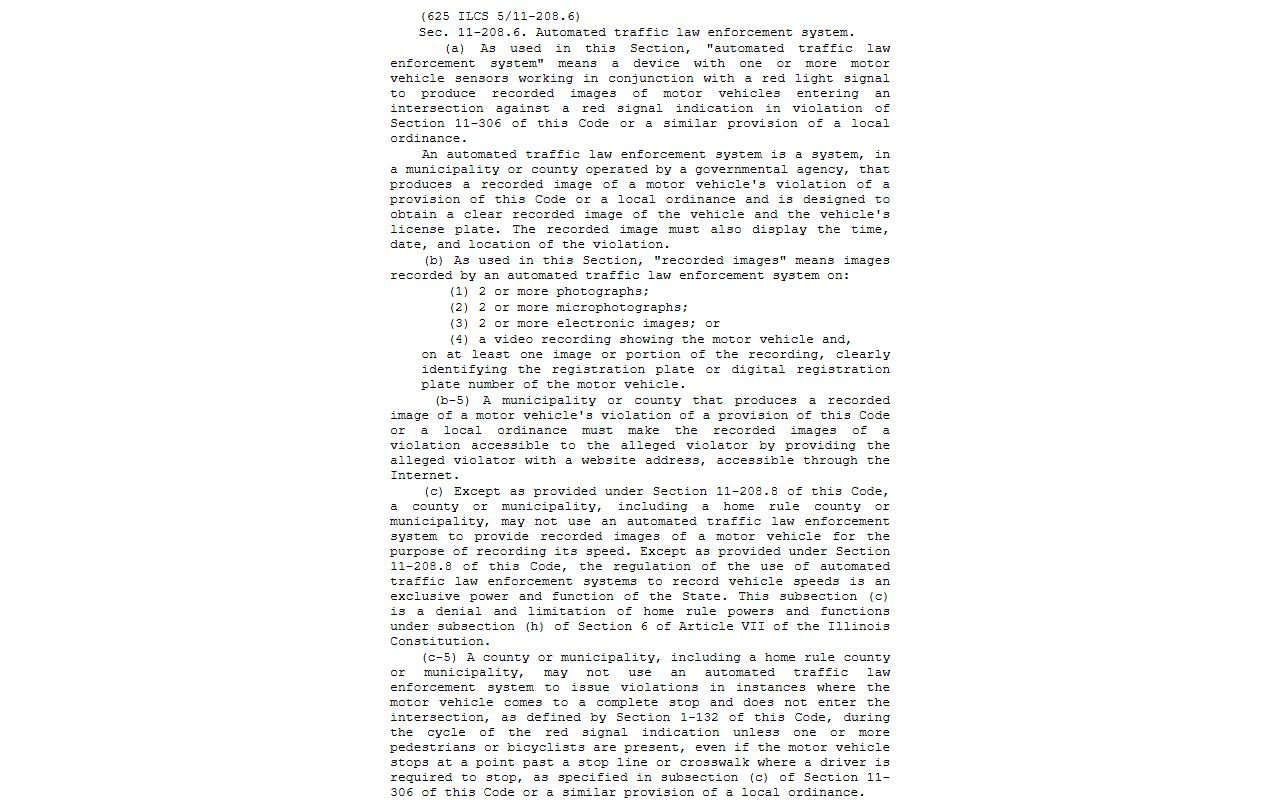
Illinois allows automated red light cameras in certain counties only. Under 625 ILCS 5/11-208.6, Cook, DuPage, Kane, Lake, Madison, McHenry, St. Clair, and Will counties can use them. The civil fine tops out at $100. A late penalty of up to $100 gets added if you miss the deadline. These are civil violations. They do not go on your driving record in Illinois. The notice must reach the vehicle owner by mail within 90 days of the violation.
Some cities run speed cameras near schools and parks. Chicago is the biggest example. Speed camera fines in Illinois start at $35 for going 6 to 10 mph over the posted limit. At 11 or more mph over, the fine jumps to $100. Warning signs must be posted at every camera spot. New cameras have a 30-day warning period before fines start, and each license plate gets one extra warning notice the first time.
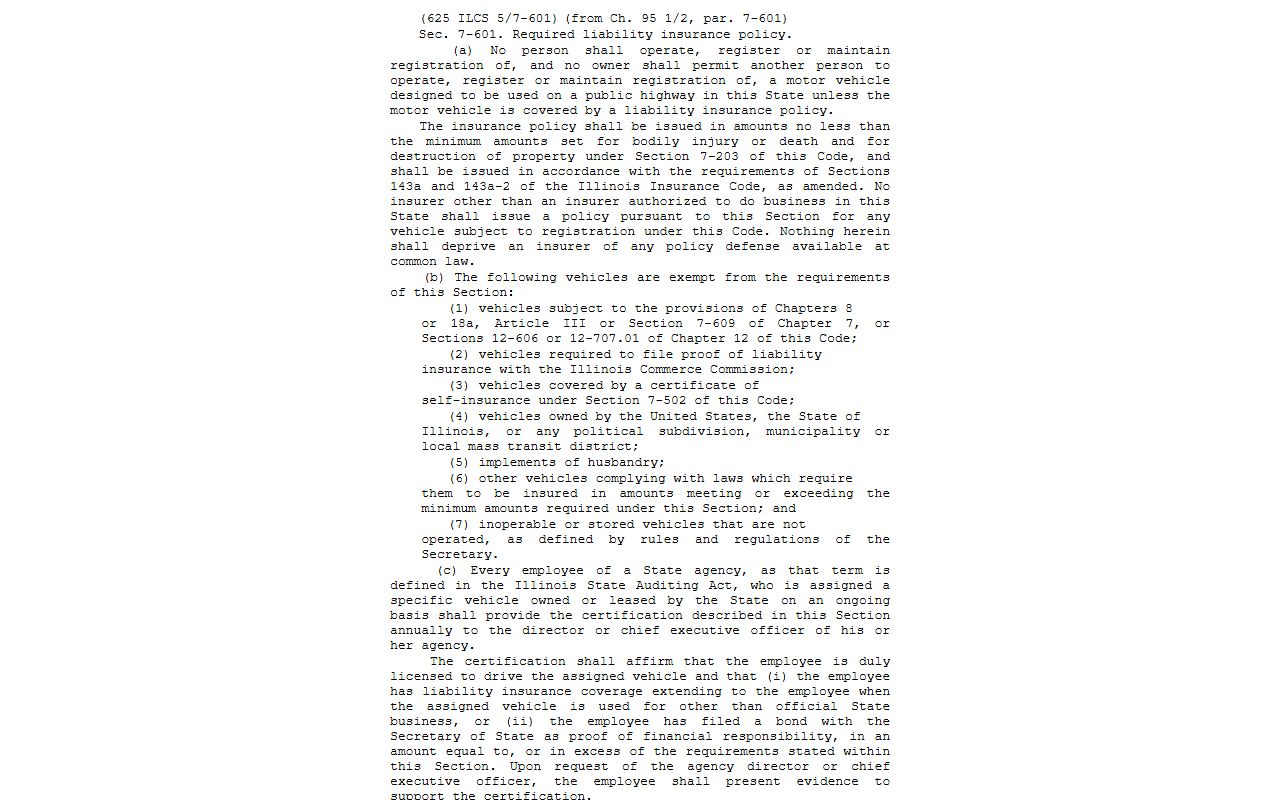
Insurance is also part of Illinois traffic law. Under 625 ILCS 5/7-601, every vehicle on Illinois roads must carry liability insurance. You must keep proof in your car at all times. Driving without it can lead to a ticket, fines, and a license suspension. Out-of-state vehicles are not exempt. Electronic proof of insurance is acceptable in Illinois, so a picture on your phone works if you get pulled over.
Find Illinois Traffic Statutes
All Illinois traffic laws are in the Illinois Compiled Statutes. You can search them at the ILCS database. This is the official source for every law in the state. Traffic statutes sit under Chapter 625, the Illinois Vehicle Code. Common sections include 11-501 for DUI, 11-601 for speed limits, 7-601 for mandatory insurance, 11-208.6 for red light cameras, 11-907 for Scott's Law, and 11-204 for fleeing police. Each of these creates a different type of traffic ticket record in Illinois.
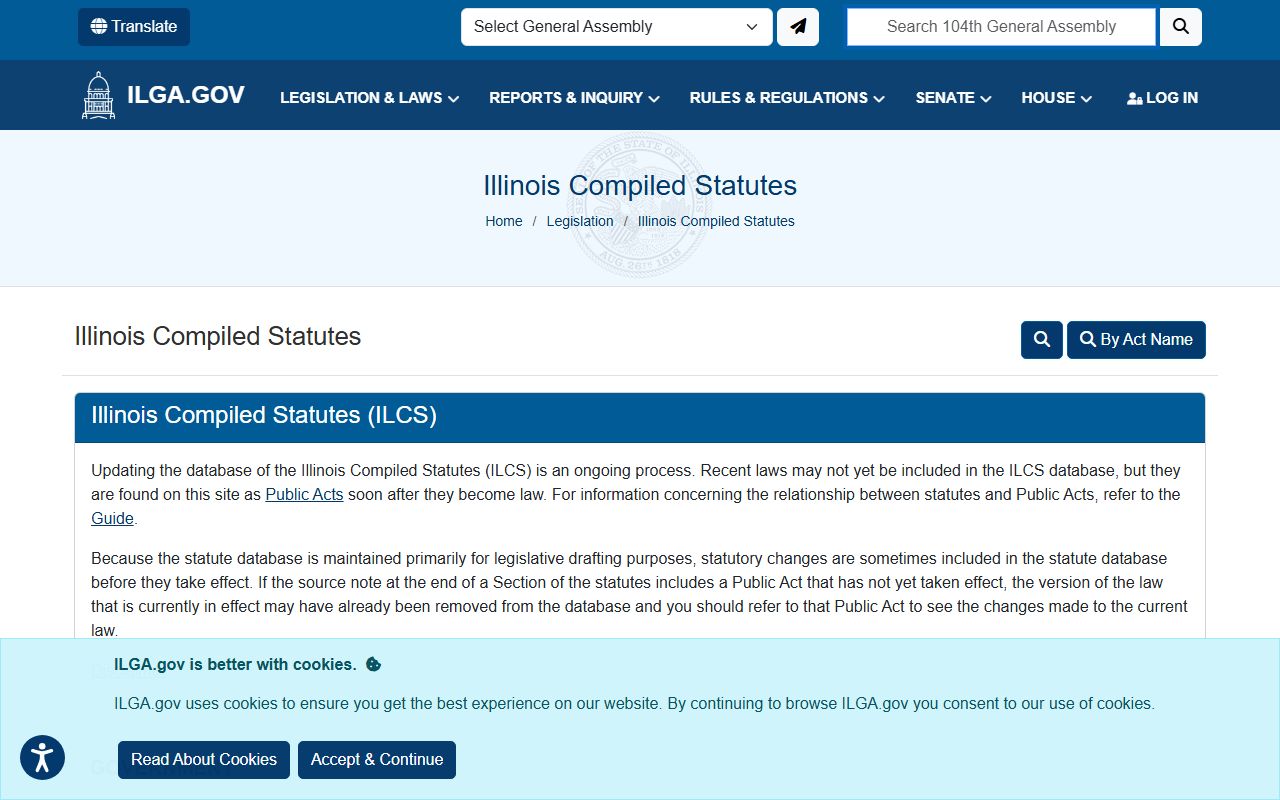
The Illinois General Assembly hosts this database on its website. You can look up any section of the Vehicle Code by number or browse by topic. The site is free to use and has the full text of every statute. It is a good resource if you want to check the exact law behind a traffic ticket in Illinois or understand what penalties apply to a certain violation.
Knowing the statute behind your ticket matters. Minor traffic offenses in Illinois carry fines only. Misdemeanors can mean jail time, higher fines, or both. For example, misdemeanor traffic offenses can bring fines up to $2,500 and up to 364 days in jail. If you face a serious charge, talk to a lawyer before your court date.
Illinois Traffic Ticket Records by County
Each county in Illinois has a Circuit Clerk who keeps traffic ticket records. Pick a county below to find local contact info, payment portals, and court details for that area.
Traffic Ticket Records in Major Illinois Cities
Residents in major cities handle traffic tickets through their county Circuit Court. Some cities also run their own ticket systems for parking and local violations. Pick a city below to learn more.